



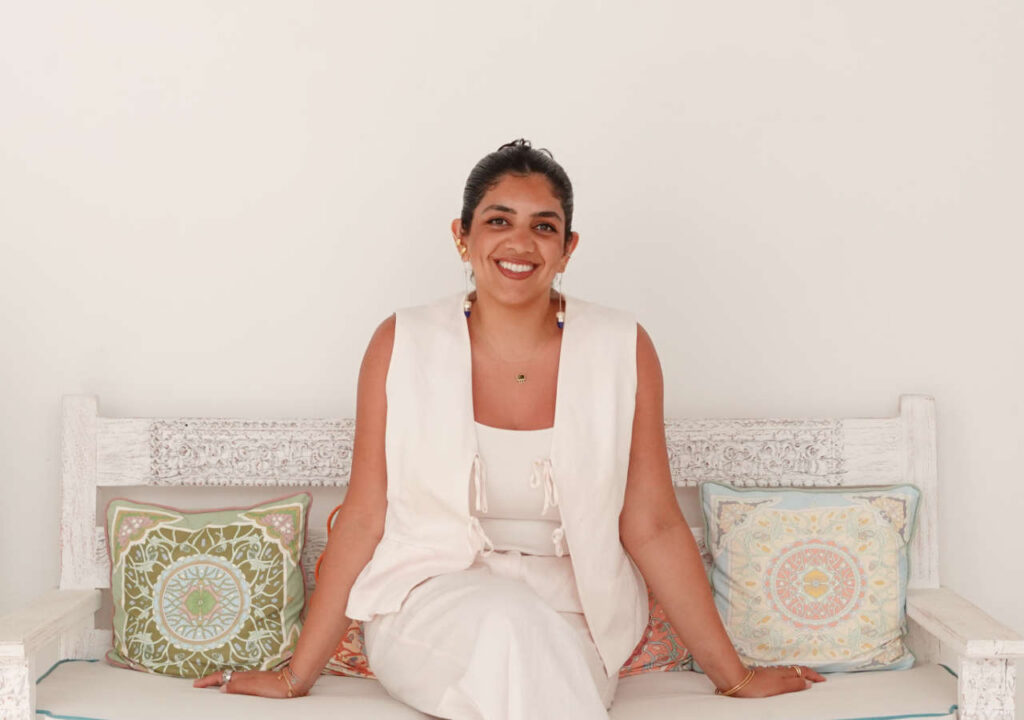
“I am not fond of cooking.”
It’s not a sentence you’d expect from the woman behind one of Oman’s most celebrated restaurants.
In fact, as a young girl, Dina Macki actively avoided the kitchen. Today, however, she has become a force to reckon with in the region’s culinary landscape as a chef, author, restaurateur, and F&B consultant.
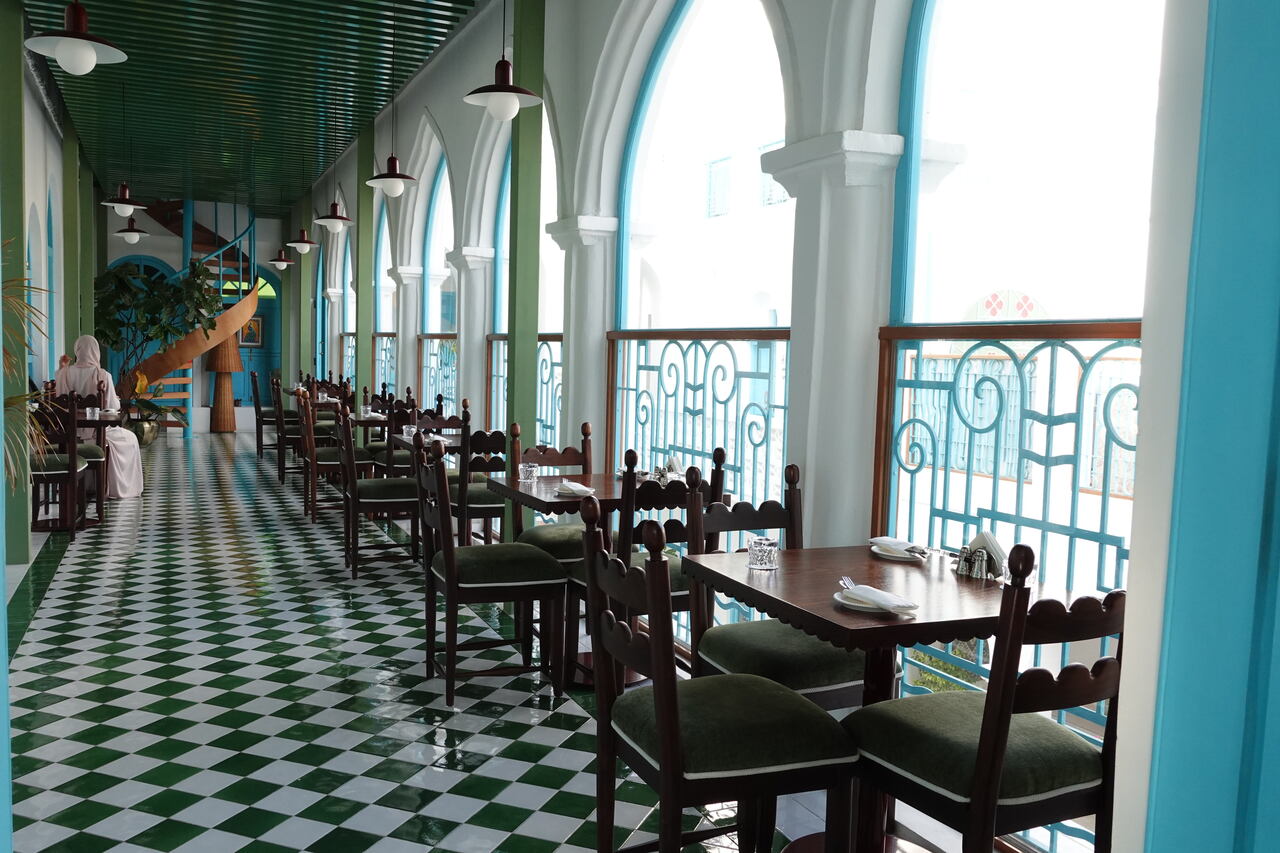
Her journey has culminated in Mesa, a carefully restored Omani home, Bait Al Sharqi, overlooking Mutrah Fort, where every detail reflects her approach to food as a means of storytelling. It’s layered, intentional, and rooted in history, an idea that runs through the space as much as it does the menu.
Before Mesa became one of Oman’s most photographed restaurants, the centuries-old house beside the fort was little more than a forgotten relic. Its walls were crumbling, the place a wreck, and its future uncertain. Initially hired as a consultant, Dina had no intention of staying beyond the planning stages. Hired to help bring the project to life, she expected to hand it over and move on. Instead, the project evolved into something far more personal.
“It became my baby by mistake,” she says with a smile. “The reason I said yes to this location is that I love history, and I love to involve the context of a place.”
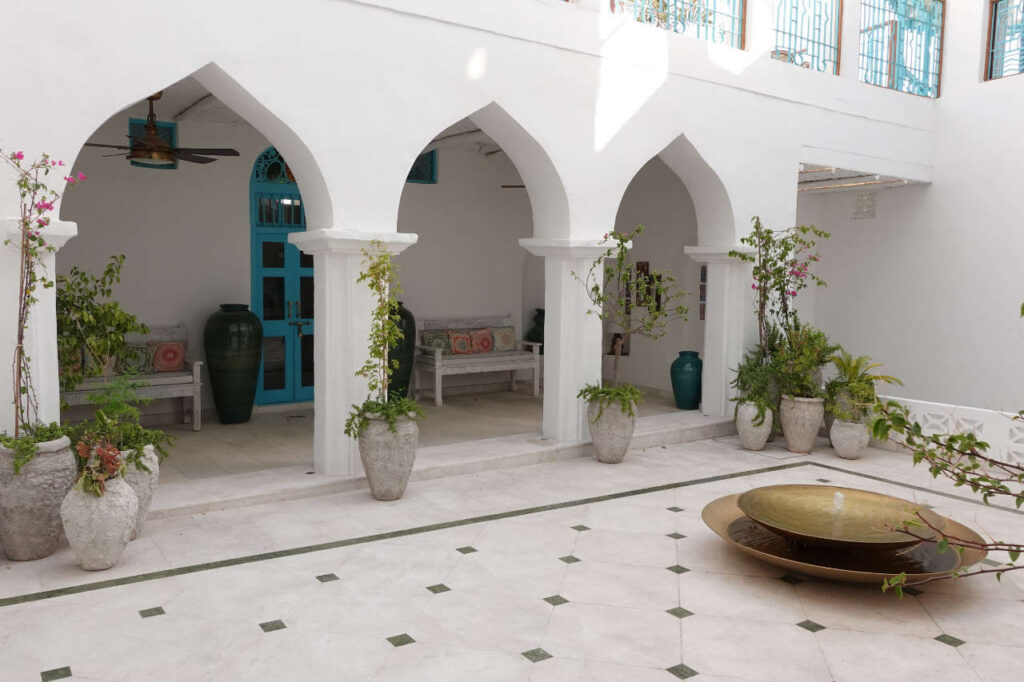
What followed was an intensive two-year restoration that demanded far more than preserving a historic building. Together with architect and close friend Amr Al Sheikh, Dina worked to shape a space that felt rooted in Oman’s heritage, while weaving cultural links from across the globe.
Every decision, from the sunlit courtyards and handpicked furnishings to the layered textures and carefully curated décor, was guided by that philosophy. The pair worked collaboratively throughout the project, sourcing handcrafted chairs from Sohar and even importing light bulbs from England in pursuit of the perfect ambience.
“I wanted you to feel like you were coming into an old Omani-Portuguese home, if there was one,” she explains.
History became their greatest source of inspiration. The original peacock perched atop the house, installed decades earlier by its former owners after travels through India, became Mesa’s enduring emblem, while Oman’s centuries-old relationship with Portugal informed everything from the interiors to the menu.
At Meza, nothing is incidental. Long before the first dish arrives at the table, the experience has already begun, through the weight of the door, the softness of the light, and the acoustics of a room designed to feel intimate even when it is full.
Dina doesn’t describe this as design. She describes it as a feeling.
“You notice everything,” she says. “Even if you think you don’t, you do. The sound, the lighting, how people move through the space… it all becomes part of how you experience the food.”
For Dina, however, aesthetics was not enough. Every design choice needed purpose, every plate needed context, and every corner needed to tell a story.
“I can’t just give you food,” she says. “I need to have context to it.”
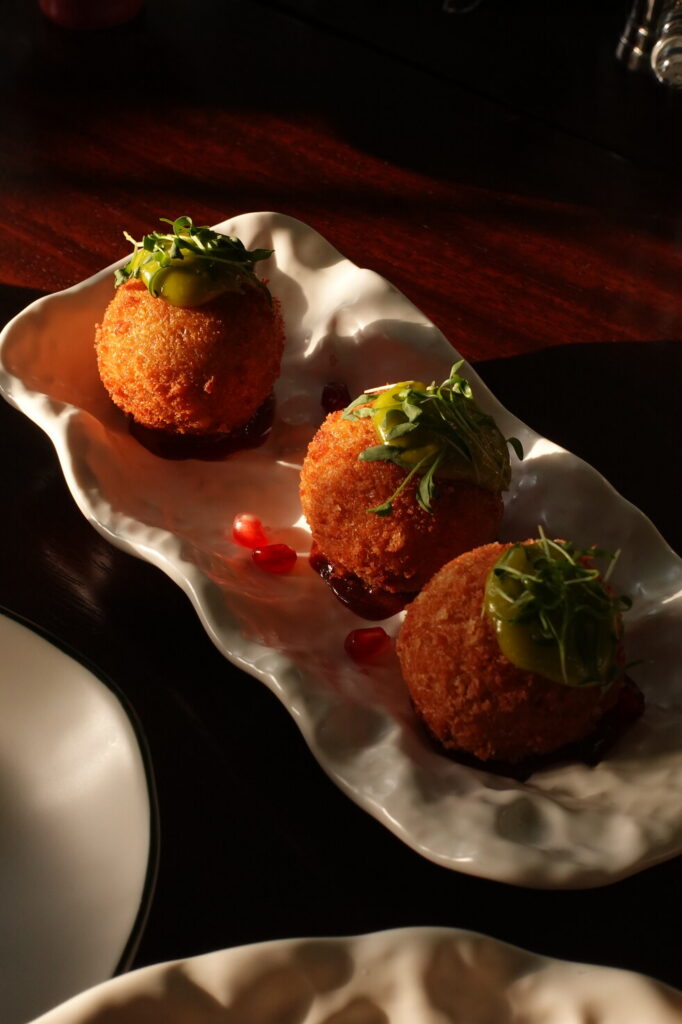
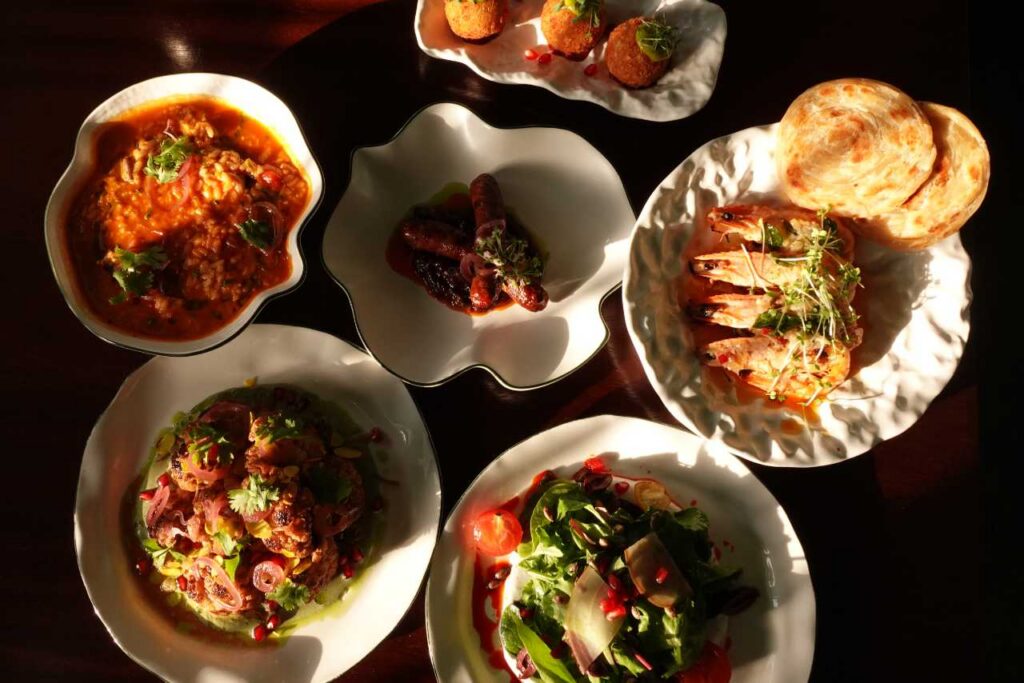
Take the madrouba croquettes, for example. A humble Omani comfort dish, traditionally made with beaten rice, chicken and dried limes, is reimagined into croquettes that are crisp on the outside and soft within. Something that locals recognise instinctively, yet Europeans understand immediately in form. It’s little surprise the dish has become one of Meza’s signature best-sellers.
Those connections extend far beyond Oman and Portugal. In Dina’s mind, the menu travels through Goa, Zanzibar, and Brazil, places connected by the movement of ingredients and migration of people and ideas for centuries. A dish at Mesa is never isolated. Every dish reflects those influences, inviting guests to recognise something familiar even if they can’t quite place it.
A memory of a home they have never been to, or a history they did not know they shared.
And that, for Dina, is the point.
“It’s not about making something new,” she says. “It’s about making you realise the connections were always there.” Dina explains “Connections. Even if it’s just spices, or texture, or the way something is eaten. That’s enough to start a dish.”
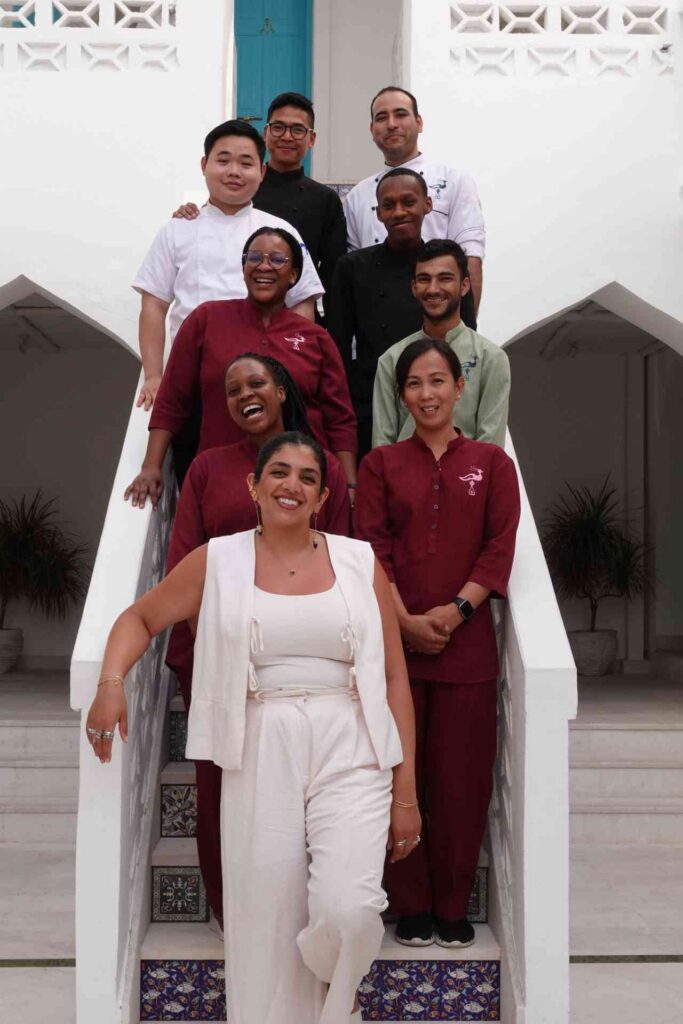
That philosophy defines Mesa. It is less a dining space and more a living narrative.
Looking ahead, Dina’s plans for Mesa remain rooted in the same philosophy that shaped its creation. The team is set to begin offering daily rentals at Bait Al Sharqi, extending the experience into another historic space in Muscat.
Yet for Dina, these steps are only part of a larger ambition.
“If I can get Mesa onto the World’s 50 Best list, it changes the scene for Oman.”
With inputs from Anne Kurian