


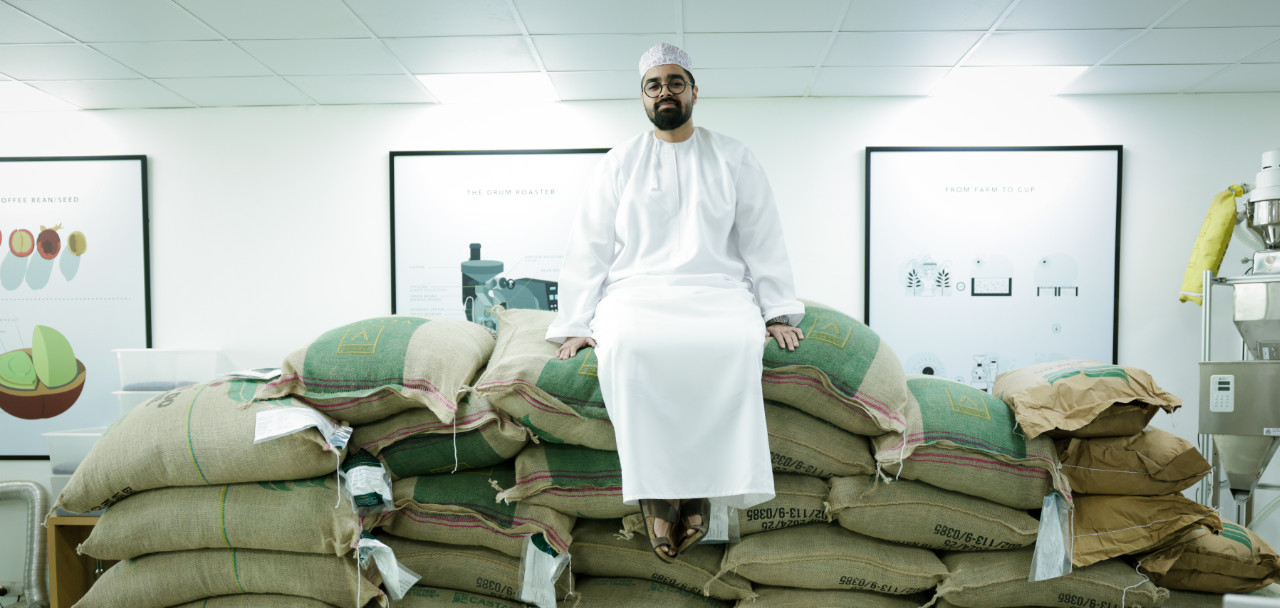

The story of Azura: The Coffee Company starts with after-work cafe hangouts, an idea, and the desire to pursue that dream. This narrative has propelled Azura: The Coffee Company, the Omani specialty coffee café and roastery, onto the global stage.
“Honestly, it started with the business side of it,” Mohammed Behlim, CEO & Co-Founder of renowned Oman-based specialty coffee café and roastery chain, Azura: The Coffee Company, admits, leaning back into the memory. He’d studied construction and project management abroad, returned home to join the family business. Coffee wasn’t part of the plan. It was just the backdrop.
How It All Began
“After work, I’d meet friends at a coffee shop most days. At some point it just clicked — what if I did this myself, as a side project?” No grand epiphany, no dramatic pivot. Just an idea that felt, at the time, simple.
Mohammed’s business idea was supported by his brother, Ahmed, and a close friend, Mohiuddin, both of them entrepreneurs. The notion of building something social — something rooted in community — was appealing.
There was just one problem: Mohammed knew nothing about hospitality, and even less about coffee itself.
The Rabbit Hole
Rather than learn by trial and error, he brought in experts — consultants to build the operational backbone, while he and his partners handled branding and space design in-house. It was in those early consulting sessions, tasting coffees side by side and being coached on what to notice in each cup, that something shifted.
“This was completely new to me,” Mohammed says. “I had a base level of appreciation before that, but this sent me down the rabbit hole.”
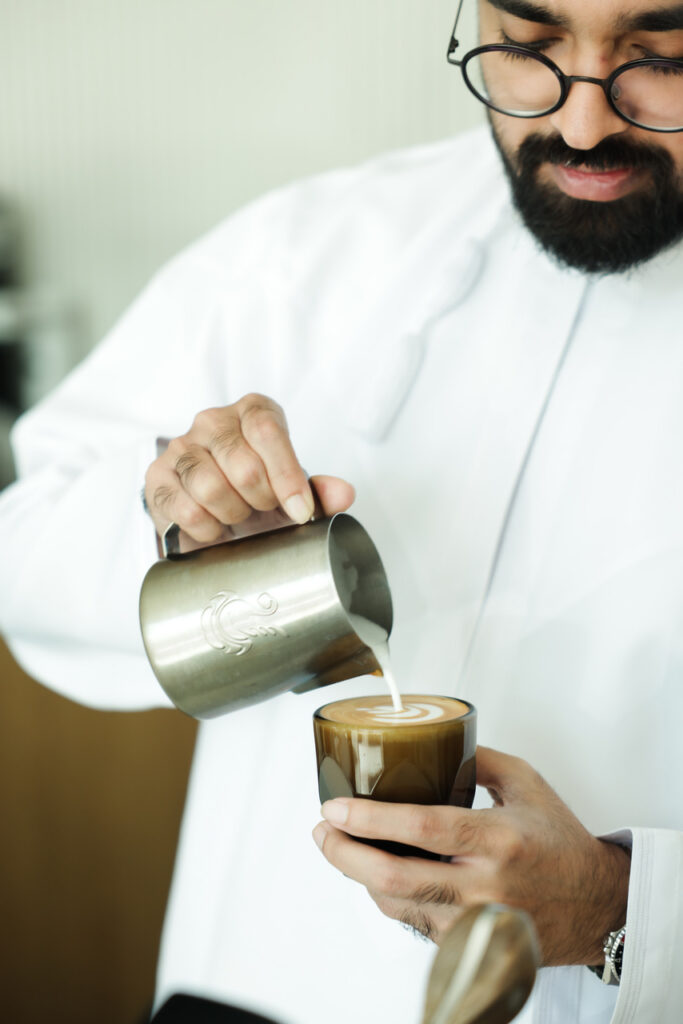
Before then, his relationship with coffee had been a fairly ordinary one — sweetened, familiar, forgiving. “Black coffee on its own felt too bold,” he laughs, tracing his personal timeline from instant coffee, to café standards, to Arabica blends hovering somewhere between mass-market and specialty. Coffee knowledge aside, Mohammed has even mastered latte art, creating one for us after the interview.
Bringing A Dream To Life
By November 2019, after roughly a year of quiet research, the idea had legs. Azura’s very first location opened at Waterfront Mall, Muscat. Momentum built quickly after that — fast enough that even his father, a veteran in the construction industry, began to take notice. “He didn’t fully understand the coffee side of things at first,” Mohammed recalls. “But he saw the momentum.”
Then came 2020. Leases for new mall locations were already signed when lockdowns hit. Revenue dropped overnight, a bakery concept was mid-development out of a dark kitchen, and a team still needed supporting. “It was genuinely stressful — sleepless nights,” Mohammed says simply. “But we got through it.”
Today, the brand boasts of six coffee outlets — with eyes now turning abroad. “We want our internal processes fully locked down before we commit to expanding abroad,” he explains. When the brand crosses borders, it won’t be exporting recipes so much as feeling — Omani hospitality, warmth, and a menu that never sits still.
The Search for the Perfect Bean
Sourcing for Azura is almost entirely single-origin — coffee bought from one farm, one estate, sometimes several estates under the same producer. Blends are the exception, reserved mostly for milk-based drinks that need body and sweetness without too much acidity. “We might pair a more traditional South American coffee with something brighter and more floral from East Africa,” he explains — Kenya or Ethiopia lending brightness to a Brazilian coffee’s chocolatey backbone.
Five years of loyalty to the same producers has paid off in ways money alone can’t buy: first access to rare micro-lots before they reach the open market. “If a Colombian farm produces a small batch — a hundred kilos, say — we might get first offer on it simply because of years of trust.”
Then there are the auctions — equal parts competition and marketplace, where judging panels score coffees on sweetness, aroma, acidity, and body before the highest performers go up for bid. For years, the brand watched from the sidelines; a coffee fetching $500–$1,000 in Dubai wasn’t yet viable to price at a premium locally. That changed in 2021, with their first successful auction win — a lot from Ethiopia.
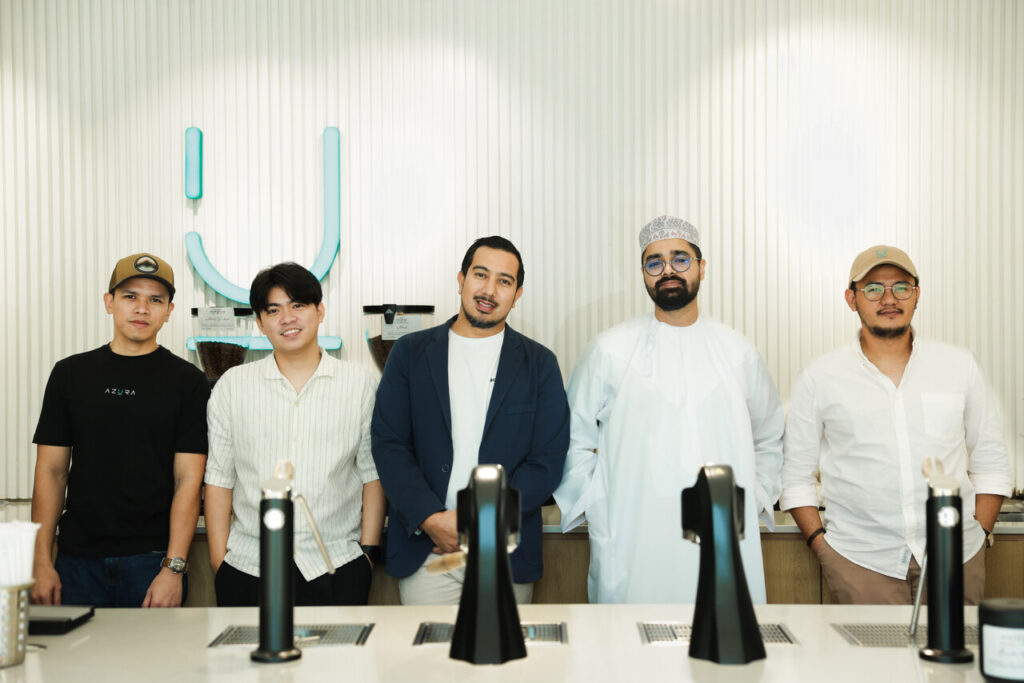
Azura wouldn’t have been a possibility, he’s quick to point out, without his two partners — his brother and a close family friend who runs a design and architecture practice. They backed him financially when he was just 24. “What I value most isn’t that they hand me solutions,” he reflects, “it’s that they point me toward finding one myself.”
Today the brand sources from seven or eight origins, with Colombia leading in volume and variety, Brazil anchoring the milk-based menu, and three or four distinct Ethiopian coffees rotating through at any given time.
Rank 68 in the World
In November, a message arrived out of nowhere: a nomination in The World’s 100 Best Coffee Shops 2026 ranking — the only list of its kind worldwide, and one you cannot apply for. “We knew of the list before that,” he says. “I’d actually visited several of the shops on the previous year’s ranking. But it wasn’t something we’d ever put ourselves forward for.”
The judging is rigorous — over 800 judges worldwide, drawn from past champions, roasters, and industry leaders, contributing 70% of the score, with public voting making up the rest. Confirmation wouldn’t come until mid-January, so in the meantime, the team shared the news quietly, treating the nomination itself as an honor.
Then came the ceremony, in Madrid, at a major coffee exhibition. Names were called out in descending order, from 100. “Azura wasn’t in the 100–91 group, or 90–81, or 80–71 — by that point it started to feel surreal.” Their name was finally called at position 68 — ahead, he shares with quiet disbelief, of plenty of well-known, respected names in the industry. “It was a wave of emotion, honestly,” he says. “A lot of appreciation for our community, our customers, our suppliers, everyone who got us there.
What began as a passion for coffee has become a story of international acclaim — with Azura: The Coffee Company proudly carrying Oman’s name onto the world stage.
What Comes Next
Success, for the Azura team, doesn’t seem to mean slowing down to enjoy it. Alongside professional certification courses and free public cuppings, they’ve quietly begun offering curated tasting experiences for small groups — inspired by traditional Japanese-style tastings, and already tested with a handful of groups to strong response.
We can’t wait to see what new heights Azura and its team will scale!